
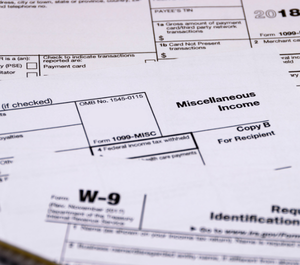
A taxpayer identification number—or TIN—is the number the IRS uses to associate income with the correct taxpayer.
Depending on the payee, it may be:
– Social Security number (SSN)
– Employer identification number (EIN)
– Individual taxpayer identification number (ITIN)
The IRS TIN Matching program allows eligible payers to confirm that a payee’s legal name and TIN combination matches IRS records before filing Forms 1099 during the upcoming tax season.
Who Is Responsible to be in compliance?
The business making the payment is the payer. The contractor, vendor, landlord, attorney, or other person receiving the payment is the payee.
The payer is generally responsible for:
– Requesting a properly completed Form W-9.
– Determining whether the payment is reportable.
– Filing the appropriate Form 1099.
– Reporting the payee’s correct legal name and TIN.
– Applying backup withholding when legally required.
– Responding properly to an IRS mismatch notice.
The payee is responsible for:
Providing their correct legal name, federal tax classification, address and TIN—and certifying that the information is accurate.
How TIN Matching Works
Before filing a Form 1099, an eligible payer or authorized agent submits the payee’s name and TIN through the IRS TIN Matching service.
The system confirms whether the combination matches IRS records. It does not disclose a person’s TIN, verify identity, determine immigration status, or confirm that someone is authorized to work.
A mismatch can occur because of:
– A typographical error
– Use of a trade name instead of the legal name
– A recent name change
– An incorrect SSN, EIN or ITIN
– The wrong tax classification
– An EIN that was recently issued and has not yet updated in IRS systems
Recommended Compliance Process Businesses can follow this workflow:
1. Collect Form W-9 before making the first payment. Do not wait until January or until the contractor has already been paid.
2. Review the form for completeness. Confirm that it includes the legal name, business name when applicable, federal tax classification, address, TIN and required certification.
3. Run the name-and-TIN combination through IRS TIN Matching. Correct mismatches before filing the information return.
4. Document the result. Keep the Form W-9, matching confirmation and related correspondence in the vendor’s records.
What Happens When the TIN Is Missing or Incorrect?
Under Internal Revenue Code Section 3406, certain reportable payments may become subject to 24% backup withholding when:
– The payee fails or refuses to provide a TIN.
– The TIN is obviously incorrect.
– The IRS advises the payer that the name and TIN do not match.
– The IRS directs the payer to withhold for another applicable reason.
The payer deducts 24% from qualifying future payments, deposits the tax with the IRS and reports it on Form 945 and the applicable Form 1099.
Backup withholding is not an additional tax. The payee may claim the amount as federal tax withheld when filing their income tax return.
NOTE: TIN Matching is an important preventive control, but completing a match does not replace the obligation to collect Form W-9 or determine whether a Form 1099 is required.